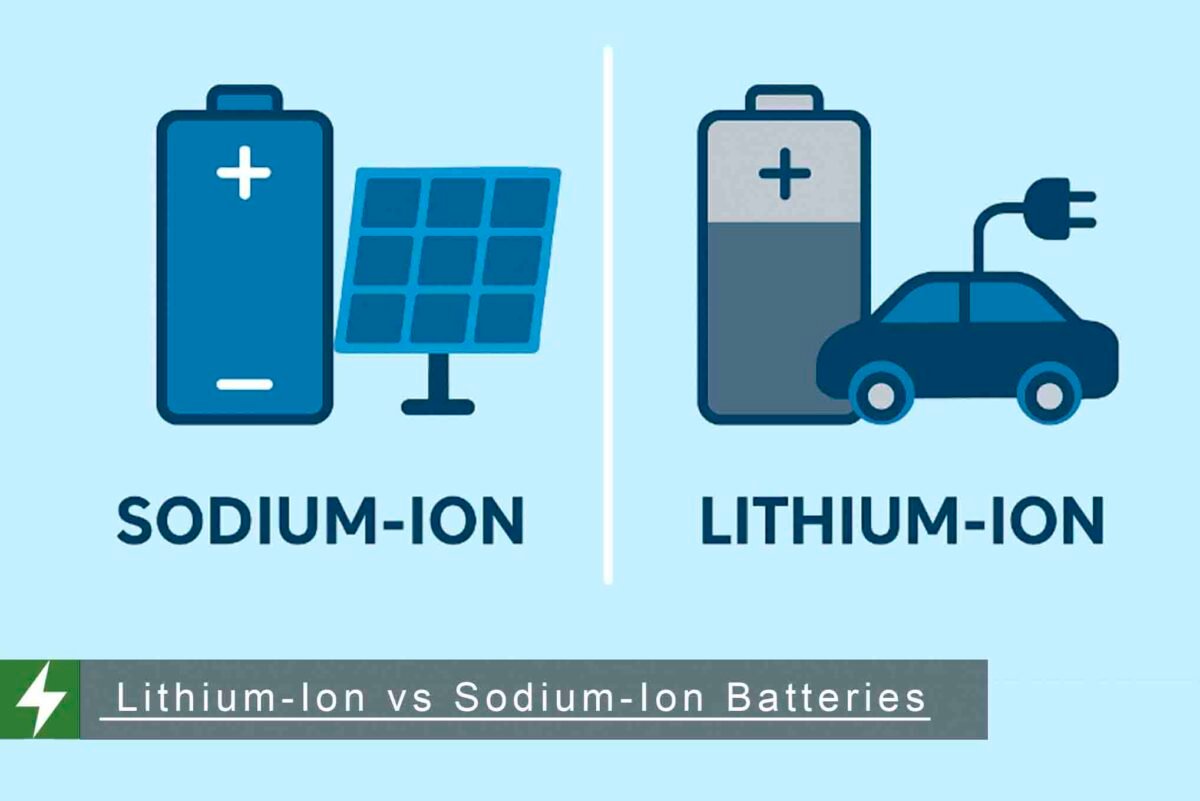
Lithium-Ion vs Sodium-Ion Batteries: Which Is Better for the Future of Energy Storage?
October 3, 2026
EV Charging Infrastructure in India
October 27, 2026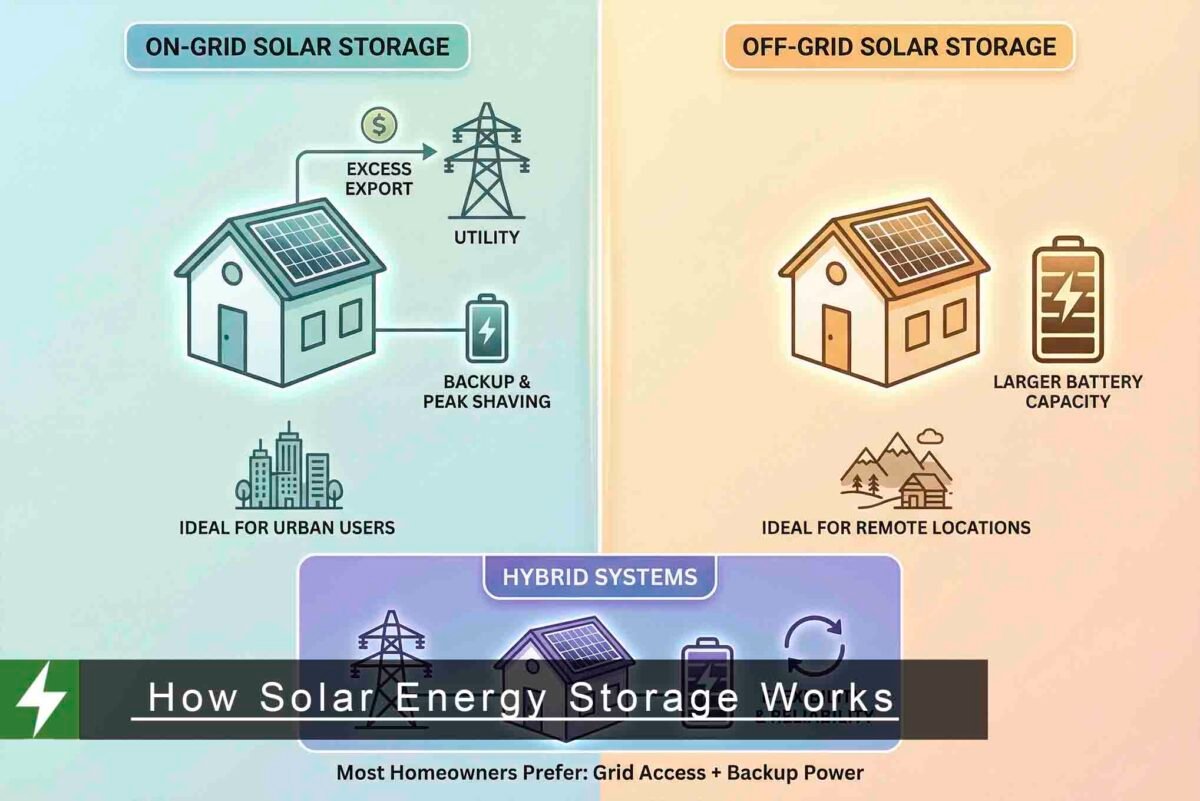
Solar energy is one of the most promising sources of clean and renewable power. However, sunlight is available only during certain hours of the day. Solar energy storage helps overcome this limitation by storing surplus electricity for use when sunlight is unavailable or electricity demand is high.
What Is Solar Energy Storage?
Solar energy storage is a system that stores electricity generated by solar panels for later use. Battery-based storage systems are commonly used in homes, commercial buildings, industrial facilities, and renewable energy projects.
During the day, solar panels generate electricity. The energy can power connected equipment, charge batteries, or be exported to the electricity grid where permitted. When solar generation decreases, stored energy can supply electricity to connected loads, depending on the system configuration.
How Does Solar Battery Storage Work?
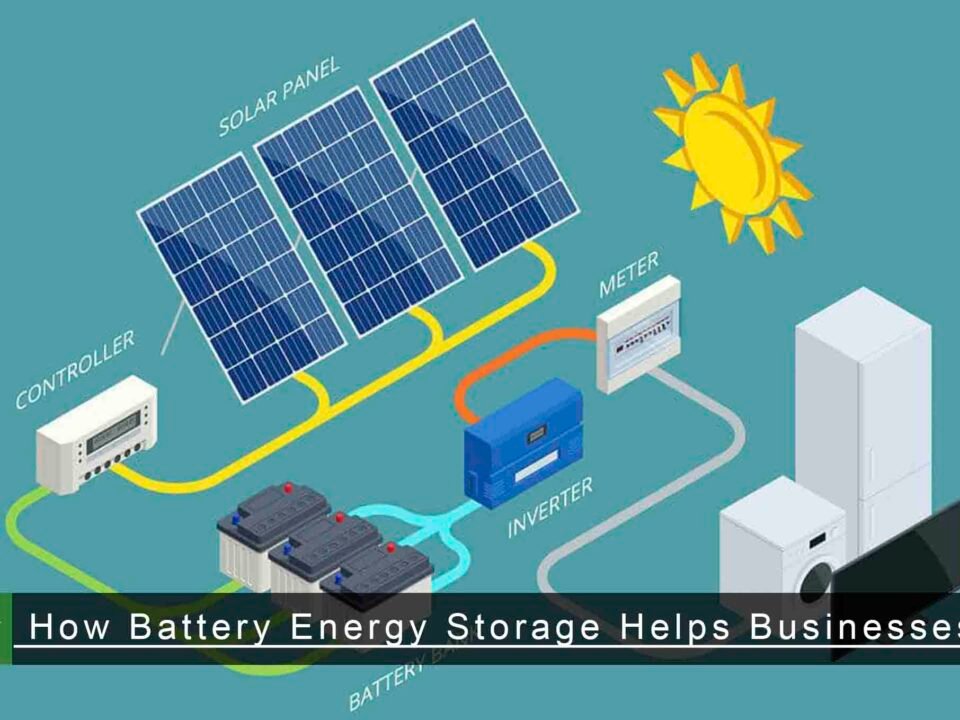
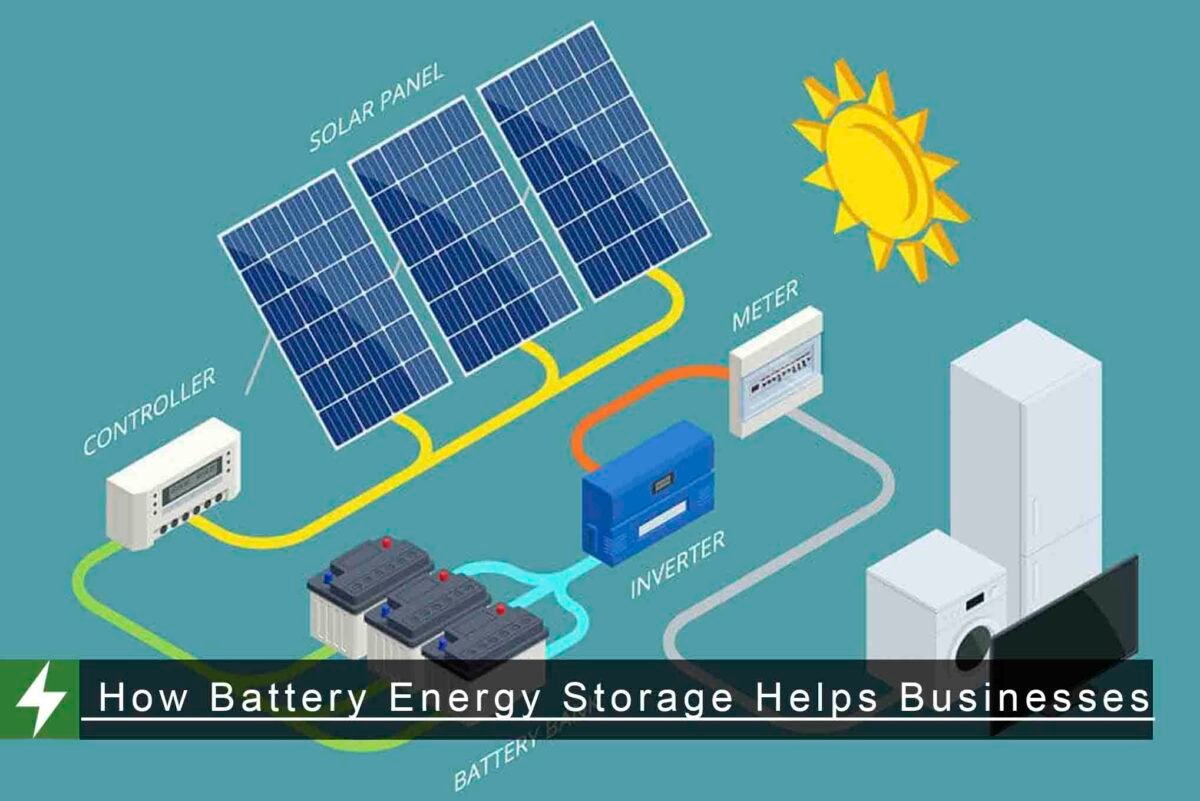
A typical solar energy storage system includes:
- Solar panels: Convert sunlight into electricity.
- Inverter: Converts electricity into the required form for connected loads.
- Battery system: Stores surplus electricity for later use.
- Battery Management System (BMS): Monitors battery conditions and supports safe operation.
- Energy Management System (EMS): Helps coordinate energy generation, storage, and consumption.
- Monitoring system: Provides information about system performance and energy usage.
The exact configuration depends on whether the installation is residential, commercial, industrial, or utility-scale.
Benefits of Solar Energy Storage
Solar storage can improve the utilisation of solar power, reduce dependence on grid electricity during selected periods, and help manage peak demand. When designed appropriately, it can also provide backup power to designated loads during outages.
For commercial and industrial users, storage may support energy-cost management and improve the integration of renewable electricity into daily operations.
Applications of Solar Energy Storage
Solar battery storage can be considered for homes, offices, factories, warehouses, hospitals, educational institutions, EV charging stations, microgrids, and large renewable energy projects.
The most suitable system depends on energy consumption, required backup duration, solar generation, battery capacity, and local electricity tariffs.
The Future of Solar Storage in India
As India expands its renewable energy capacity, energy storage will play an increasingly important role in balancing electricity supply and demand. Advances in battery technology, power electronics, and intelligent energy management are creating opportunities for more flexible and efficient energy systems.
At 108ENERGY, we focus on exploring integrated energy solutions that bring together solar power, battery storage, and intelligent energy management to support a cleaner energy future.