
EV Charging Infrastructure in India
October 27, 2026
The Future of Renewable Energy in India: Solar, Batteries and Smart Energy Systems
October 27, 2026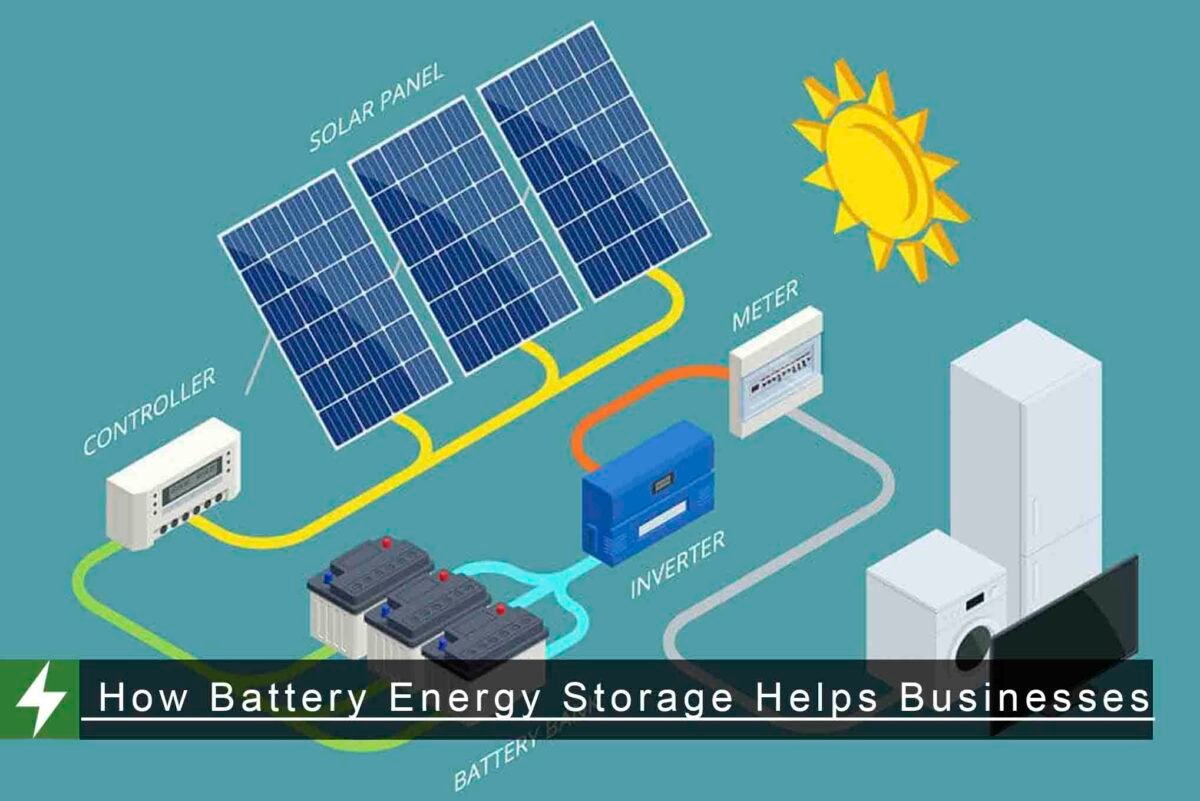
Electricity is a major operating expense for many commercial and industrial facilities. Factories, warehouses, offices, shopping centres, and other businesses may experience high demand during particular periods of the day. Battery Energy Storage Systems (BESS) can help businesses manage when they use electricity and how they utilise renewable energy.
Understanding Battery Energy Storage
A Battery Energy Storage System stores electricity and releases it when required. A typical installation combines batteries, power conversion equipment, a Battery Management System (BMS), monitoring tools, and energy management controls.
The system’s performance depends on its capacity, power rating, efficiency, operating strategy, and the electrical loads it supports.
What Is Peak Demand Management?
Some electricity tariffs include charges based on a facility’s maximum power demand. A suitably designed battery system may discharge during selected high-demand periods to reduce the amount of electricity drawn from the grid at those times.
This approach is often called peak shaving. Its financial value depends on the tariff structure, the duration and frequency of peak demand, and the battery’s usable capacity.
Using Stored Solar Energy
Businesses with rooftop or ground-mounted solar installations may generate more electricity than they can use immediately. Where the system configuration allows, surplus electricity can charge the battery and be used later, including during periods of lower solar generation.
This can improve solar self-consumption. However, charging and discharging losses, battery degradation, and the difference between electricity import and export tariffs must be considered.
Backup Power and Operational Resilience
Battery storage may provide backup power to selected equipment during grid interruptions when the system is specifically designed for that purpose. Critical loads, required backup duration, inverter capabilities, and electrical protection must be assessed during planning.
A standard grid-connected solar system does not necessarily provide power during a blackout. Backup operation requires compatible equipment and appropriate system configuration.
How to Evaluate a BESS Investment
Businesses should consider:
- Reviewing electricity bills and interval demand data.
- Identifying peak-demand periods and critical loads.
- Assessing existing solar generation and consumption patterns.
- Selecting suitable battery power and energy capacity.
- Estimating installed cost, operating cost, and expected degradation.
- Comparing potential savings against financing and replacement costs.
- Planning safety systems, maintenance, monitoring, and end-of-life handling.
A financial model should examine realistic operating scenarios rather than assume that every unit of stored electricity produces a saving.
Is Battery Storage Suitable for Every Business?
Not necessarily. The business case depends on electricity tariffs, outage frequency, energy usage, available space, battery technology, and project costs. Some sites may benefit more from energy efficiency, load scheduling, or solar power before adding storage.
At 108ENERGY, we believe that energy storage should be evaluated as part of a complete energy strategy—one that considers generation, consumption, reliability, and long-term operating costs.